

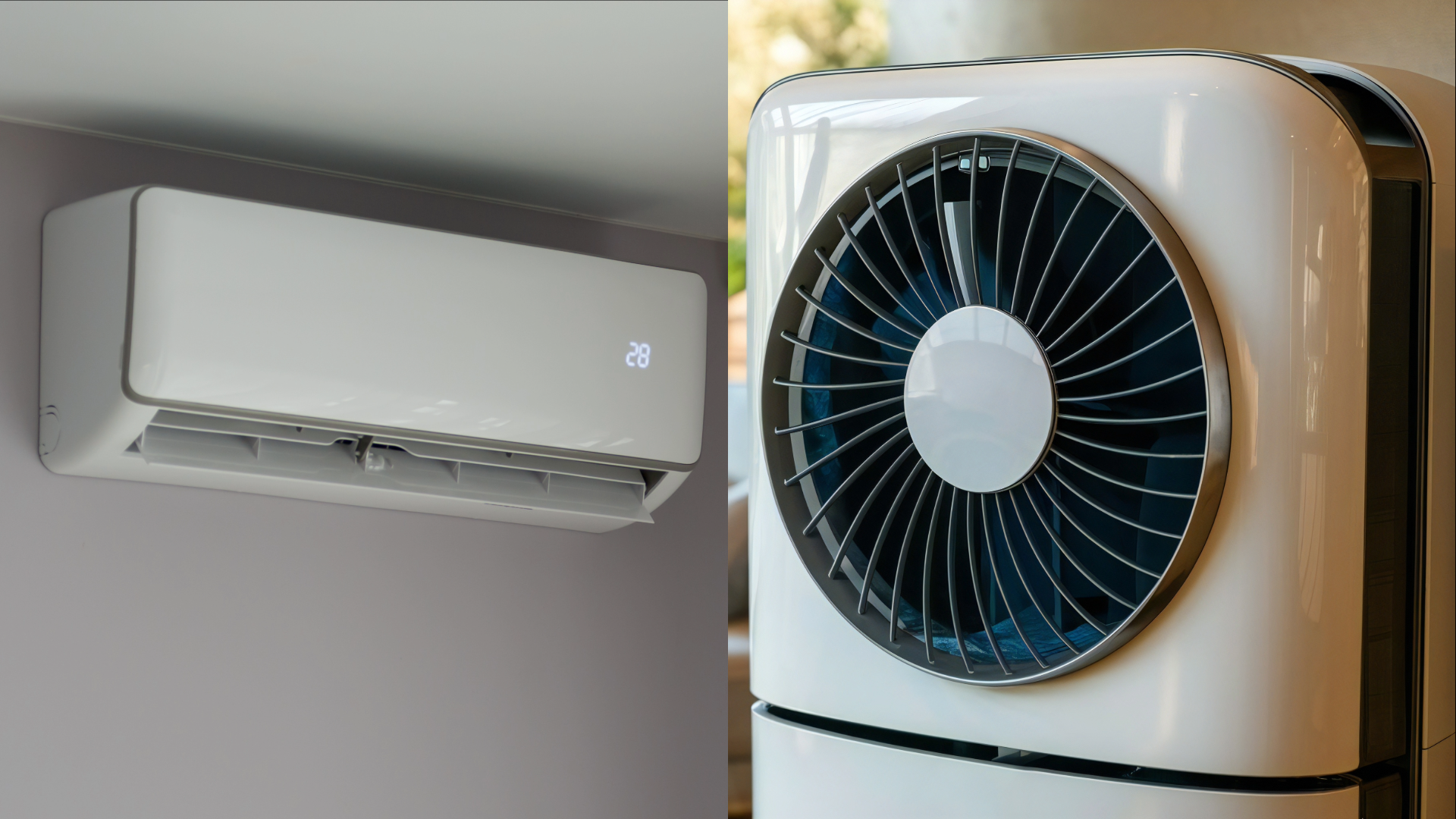
With summer temperatures in London and Surrey regularly exceeding 30°C, staying comfortable indoors is no longer optional: it’s essential.
Many homeowners start by comparing air conditioners and air coolers. On the surface, they sound similar. In reality, they deliver completely different results.
If you live in a modern London flat, a Surrey semi-detached home, or a sun-exposed loft conversion, choosing the right system will determine whether your home feels refreshingly cool, or just slightly less hot.
Let’s break it down properly.
This one distinction explains everything.
Air conditioners use refrigerant technology to extract heat from inside your home and release it outside. Air coolers, by contrast, blow air through water to create a mild cooling effect.
Think of it like this:
The performance difference is significant.
Here’s what you can realistically expect during a typical UK heatwave:
System | Average temperature reduction | Result indoors |
Air cooler | 2°C to 5°C | Slight relief, still warm |
Air conditioner | 8°C to 15°C | Properly cool, controlled comfort |
Example:
If your bedroom in a Surrey new-build reaches 29°C:
That’s the difference between struggling to sleep and sleeping comfortably.
Temperature is only half the story.
Humidity makes warm air feel far worse.
Air conditioners reduce humidity by up to 40–60%, creating crisp, fresh indoor air.
Air coolers do the opposite. They add moisture into the air, which can make rooms feel sticky, especially during humid UK summers.
This is particularly noticeable in:
Many people assume air coolers are the smarter financial choice.
Upfront, yes, but long term, not necessarily.
Here’s the real comparison:
System | Power usage | Cooling efficiency |
Air cooler | 50–150 watts | Low |
Air conditioner | 300–800 watts | Very high |
Because air conditioners cool faster and maintain temperature, they cycle on and off efficiently.
Modern inverter air conditioners can cost as little as £0.20–£0.40 per hour to run.
For many households, that’s less than running multiple fans continuously.
This is where air conditioning becomes more than just cooling.
Modern systems filter out:
This is particularly valuable in urban London areas with higher pollution levels.
Air coolers provide no filtration benefits.
London flats, especially modern builds, trap heat efficiently.
Air coolers struggle here because:
Air conditioning works extremely well due to precise temperature control.
Detached and semi-detached homes often have:
These spaces heat up quickly.
Air conditioning provides reliable cooling across bedrooms and living spaces.
Air coolers cannot keep up with larger areas.
Lofts are the hottest rooms in any home.
Temperatures can exceed 35°C during heatwaves.
Air coolers are ineffective here.
Air conditioning provides immediate and consistent relief.
Modern air conditioners operate at 19–30 decibels.
That’s quieter than a whisper.
Air coolers often run at similar or higher noise levels but deliver far less cooling benefit.
This makes air conditioning the clear winner for bedrooms.
Typical UK pricing:
System | Upfront cost | Lifespan | Value |
Air cooler | £50–£200 | 2–5 years | Short term |
Air conditioner | £1,200–£2,500 installed | 10–15 years | Long term investment |
Air conditioning also increases property appeal and resale value, particularly in premium London and Surrey markets.
Demand has increased significantly in recent years.
Common reasons include:
Air conditioning is quickly becoming standard in modern UK homes.
They provide limited relief but cannot properly cool rooms, especially during humid weather common in London and Surrey.
They are not a replacement for air conditioning.
No. Modern systems are highly efficient.
Typical cost is around £40–£60 per month during summer, depending on usage.
Yes. Homes in these areas often trap heat, making air conditioning one of the most effective ways to improve comfort and sleep quality.
Yes. Air conditioning is increasingly seen as a premium feature, especially in modern flats, loft conversions, and high-end homes.
Yes. Multi-room systems can cool multiple bedrooms and living spaces efficiently.
Share this post: